Overview
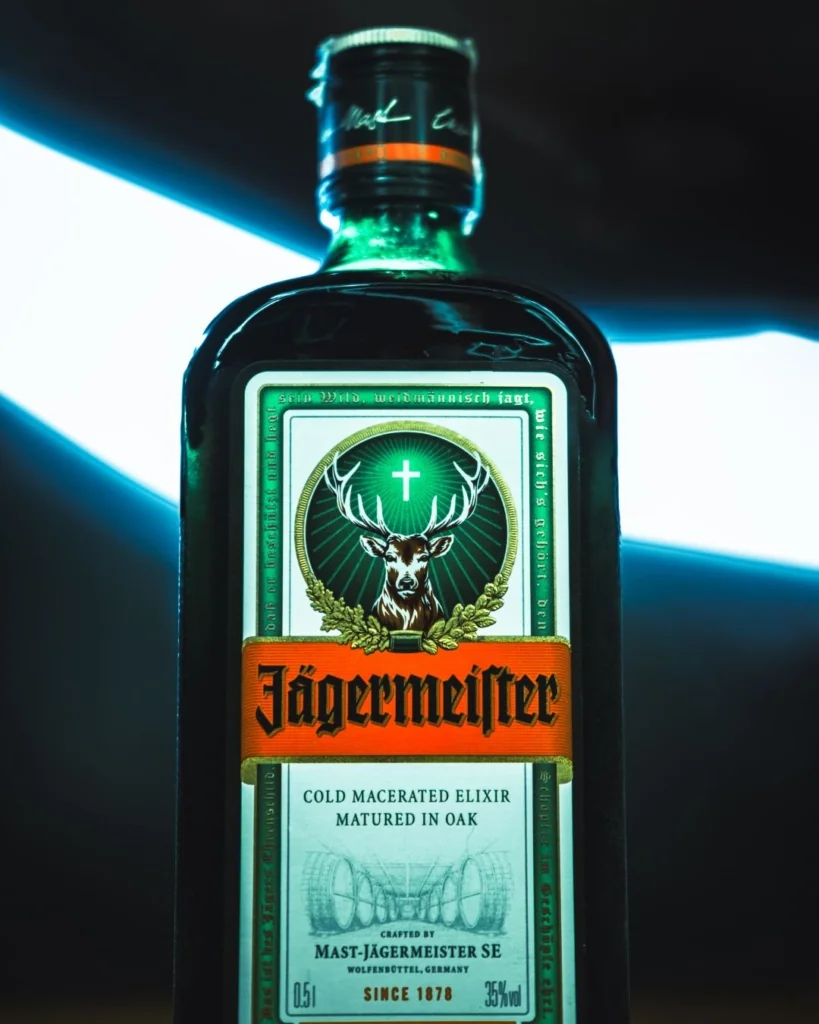
The EU Intellectual Property Office (EUIPO) granted German spirits giant Mast-Jägermeister SE a victory in a trademark dispute with Italian drinks producer Polini Group. Polini Group attempted to register their brand Alten Kräuterfrau. Jägermeister objected, arguing that the brand mimicked the its distinctive world-famous herbal liqueur. How might have consumer surveys been used, had this dispute had taken place in the United States?
Origins of Dispute
The global market for herbal liqueurs is valued at over $4 billion annually, with Jägermeister leading the category worldwide. In the U.S., Jägermeister ranks among the top 10 imported liqueurs, with NielsenIQ reporting steady market share growth among millennial and Gen Z consumers who associate the brand with authenticity and nightlife culture. In 2024, Mast-Jägermeister SE reported sales of more than 120 million bottles worldwide, with Germany, the U.S., and the UK among its top markets.
In 2022, EUIPO initially dismissed Jägermeister’s protest, ruling that Alten Kräuterfrau’s branding was “visually and aurally dissimilar and conceptually similar to a low degree.” Jägermeister appealed the decision in 2025, and EUIPO reversed its decision, citing Jägermeister’s reputation and the risk that consumers could confuse the products if they were placed side by side on the same shelf. Limited conceptual similarity, combined with similar gothic-style fonts, color schemes, and configuration, were sufficient in this case to raise consumer confusion concerns.
How This Could Play Out in the U.S.: Likelihood of Confusion Surveys
While this dispute unfolded in Europe, had it arisen in the United States, a central question in litigation would be whether consumers are likely to be confused between Jägermeister and Alten Kräuterfrau. Where consumer confusion is at issue, U.S. courts often rely on likelihood of confusion surveys as evidence. Likelihood of confusion surveys typically ask a representative sample of consumers whether they believe the two products come from the same company or are affiliated or associated with each other.
While EUIPO emphasized brand reputation and conceptual similarity, a U.S. court may rely on survey evidence of consumer confusion. Likelihood of confusion surveys provide empirical evidence about consumer confusion by directly testing whether relevant consumers are confused. The results can prove important in trademark infringement cases.
IMS Legal Strategies survey experts design and conduct likelihood of confusion surveys that meet rigorous standards, to measure whether ordinary consumers perceive a connection between two trademarks. Our experts bring decades of experience testifying in federal and state courts, as well as administrative venues like the Trademark Trial and Appeal Board, on precisely these types of trademark disputes.
If your brand is involved in a dispute over trademark infringement, MMR Strategy Group, an IMS Legal Strategies company, survey experts can help. With decades of experience in likelihood of confusion, secondary meaning, and false advertising surveys, we bring scientific rigor and courtroom credibility to your case.
This post was written with 100% public information.